Tankless Water Heater Repair in Orange County, CA
Tankless water heaters are reliable, but they are also more complex than a tank. A flashing error code, cold-water sandwich or a unit that fires and then shuts off usually points to one specific system: ignition, gas supply, venting, water flow or scale buildup.
Our tankless repair visits start with reading the unit's error history and testing each of those systems, so the fix targets the real cause instead of replacing parts on a guess.
CSLB #1041460 · Licensed & insured · Serving OC, LA & the Inland Empire



Request tankless water heater repair
What happens next
- 1
You send the request
- 2
We call to confirm details
- 3
A licensed tech arrives
Why does a tankless unit keep showing error codes?
An error code identifies a condition detected by the control system, not necessarily the failed part. An ignition fault may reflect fuel delivery, ignition components or another condition preventing a stable flame. Replacing the part named in an online discussion can leave the cause untouched. Useful diagnosis connects stored history with observations and measured conditions. Note which fixtures were running, whether the problem followed an outage and whether the display changed. Repeated resets can obscure that history without making the appliance safer or repairing a failing component.
Temperature changes at a shower can originate outside the heater. A worn mixing cartridge, plumbing crossover or restricted fixture can alter hot water flow enough to affect operation. If other fixtures stay stable while one shower changes temperature, that pattern matters. If every outlet goes cold together, investigation shifts toward shared equipment and supplies. Neither pattern establishes a diagnosis by itself. Testing several outlets helps separate a distribution problem from an appliance fault and avoids replacing heater components to solve a fixture issue elsewhere in the home.
Scale and component failure can produce overlapping symptoms but require different decisions. Mineral deposits reduce heat transfer and restrict passages, while a damaged sensor or control may report conditions incorrectly. Cleaning can address deposits when suitable for the model; it cannot restore a leaking heat exchanger or damaged electronics. After a repair, testing should reproduce the original demand as closely as practical. Stable operation at one tap may not answer a complaint that appears only with several fixtures running. Describe that demand when arranging your visit.
Tankless only: this page covers tankless repairs. Tank water heater problems are handled under our emergency repair service.
Gas vs electric: most tankless units we repair are gas-fired, both condensing and non-condensing. We also look at electric tankless units and tell you plainly if one is worth repairing.
Repair or replace: if a heat exchanger has failed on an older unit, we compare the repair against a new tankless installation so you can choose.
An error code on the controller or remote that keeps returning after a reset.
Water that turns hot, then cold, then hot again during a shower.
The unit does not fire when a hot tap opens, or fires only at higher flow rates.
Hot water temperature that will not reach the set point, especially in winter.
Clicking, whistling or a fan that runs without the burner lighting.
Water dripping from the unit, the condensate line or the pressure relief valve.
How tankless faults are investigated
- 1
Arrival and history: we ask when the problem started and read the stored error codes.
- 2
Gas and power checks: we confirm gas pressure under load and steady power to the unit.
- 3
Ignition and flame: we inspect the igniter, flame rod and burner for wear or soot.
- 4
Water side: we check flow sensors, inlet filter screens and the heat exchanger for scale.
- 5
Venting and condensate: we check vent terminations and the condensate drain on condensing models.
- 6
Repair: we explain the cause, then replace the failed part or clean the affected component with your approval.
- 7
Testing: we run hot water at several fixtures to confirm stable temperature before leaving.
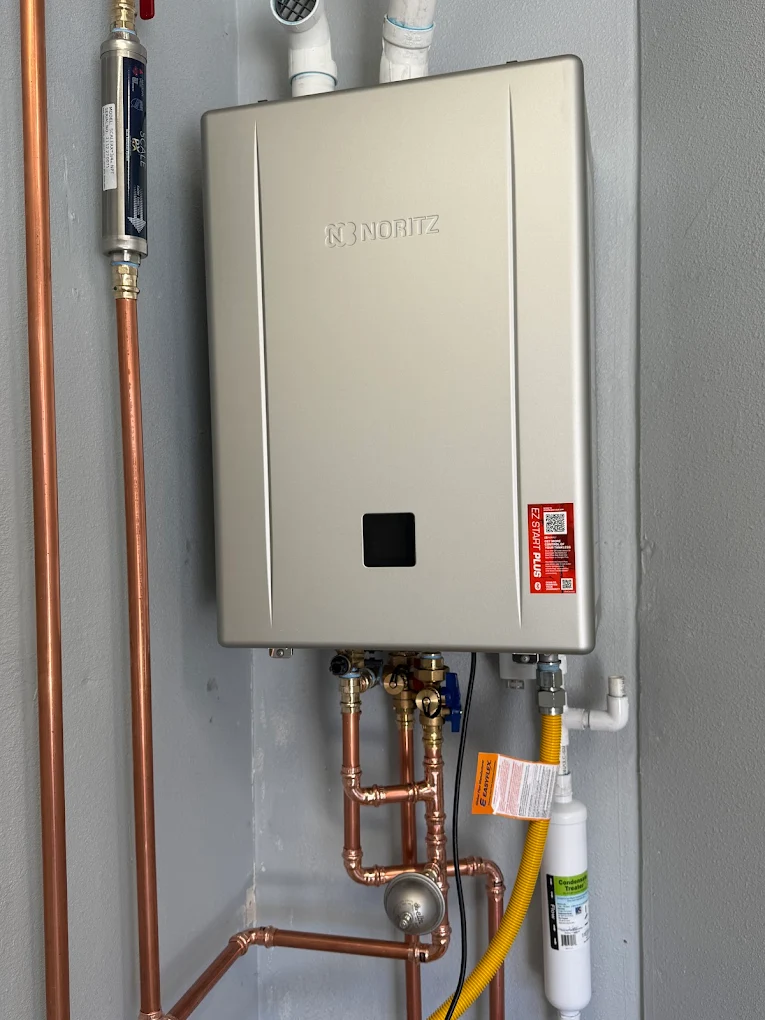
Safety checks relevant to tankless repairs
- 1Gas supply line
- 2Approved venting
- 3Condensate drain
- 4Isolation / service valves
Tankless repair must preserve the appliance's listed safety functions. Flame proving devices, high-limit controls and airflow safeguards must not be bypassed to keep the burner running. Replacement parts and procedures must be approved for the model. Gas connection work needs appropriate leak checks, while combustion and vent checks follow service guidance. Electrical testing requires safe isolation where applicable. A cleared display does not show the underlying fault has been resolved. Testing must establish normal operation rather than merely remove the warning that first prompted the call.
When diagnosis identifies vent, condensate or supply defects, corrections follow the equipment instructions and local requirements. Vent terminations need specified clearances, and condensate on condensing models must discharge through an approved arrangement. Relief piping remains unobstructed and cannot be capped to stop dripping. Permit needs depend on the actual scope, particularly when piping, venting or circuits change. Replacing a component is not automatically a complete new installation. We explain relevant corrections separately rather than imply every repair requires every upgrade listed for replacement equipment.
What determines a tankless repair estimate
Equipment and model
Water and fuel connections
Venting requirements
Electrical requirements
Permits and scope
Access and removal
A tankless repair quote depends on the fault confirmed by testing, not the error number alone. Similar shutdowns can result from restricted flow, interrupted ignition, an obstructed condensate path or component failure. Model and serial information determine compatible parts, while installation access affects labor. Intermittent faults may require checking several operating conditions. Ask the free quote to distinguish diagnosis, cleaning and component replacement. That shows which work addresses the proven cause and which items are separate maintenance recommendations rather than assumed parts swaps.
The scope can expand when the appliance reacts to an installation problem outside its cabinet. Inadequate gas delivery under load, unsuitable vent routing or unstable electrical supply may need correction before a replacement part operates reliably. Heat exchanger work differs substantially from sensor replacement or screen cleaning. Warranty eligibility may affect parts responsibility, but coverage terms need confirmation for the actual model. Compare repair with replacement only after the cause and surrounding deficiencies are understood. Ordering a part without testing can leave the original complaint unresolved.
Discuss the scope for your property
Request serviceDiagnostics, parts and return visit planning
Most diagnostic visits take about an hour. Many repairs are completed the same visit when the part is available.
Brand-specific parts sometimes need to be ordered, which adds a return visit.
Who does the work
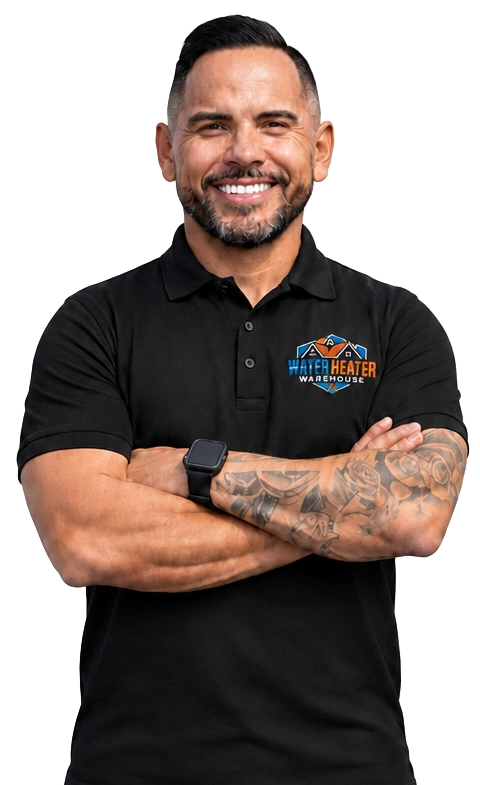
Chris Flores, Founder & Owner
We focus exclusively on water heaters, including traditional tank systems, tankless water heaters, and energy-efficient heat pump water heaters.
Today, Chris remains deeply involved in daily operations, quality control, and customer experience.
Meet our team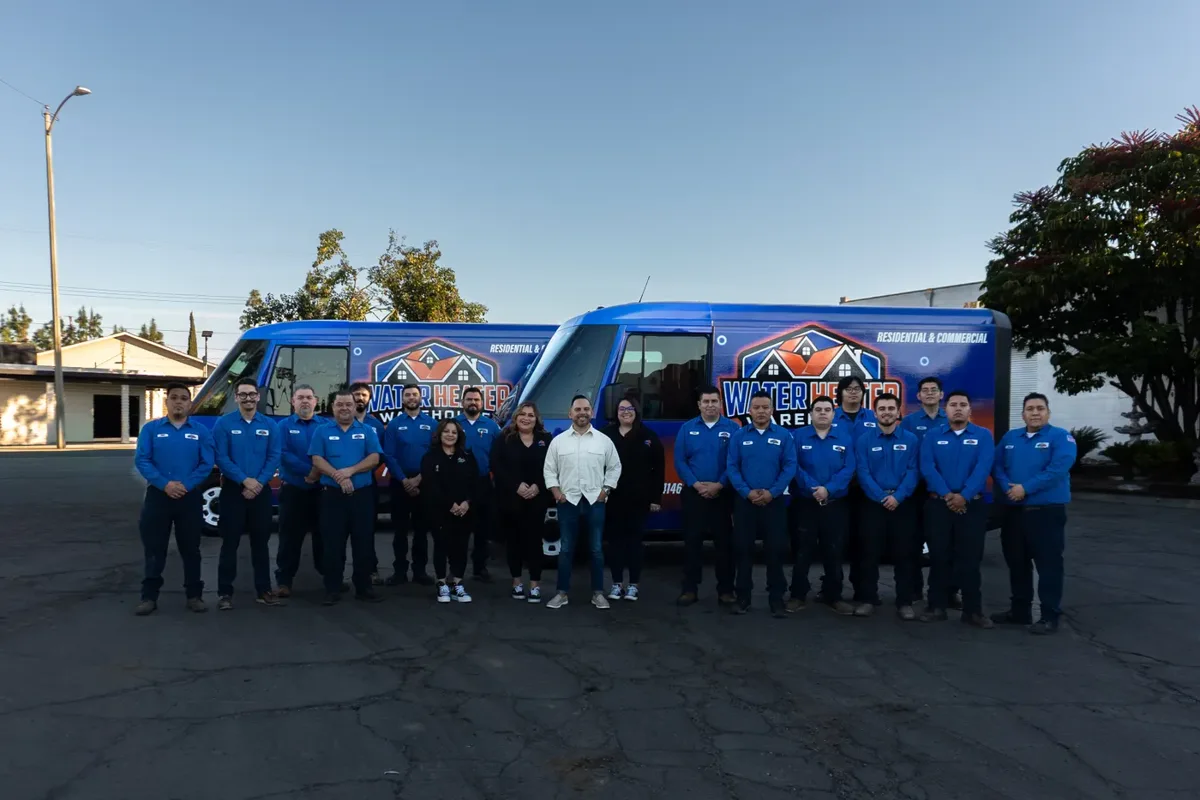
FAQ
Can I just reset my tankless unit when it shows an error?
A reset can clear a one-time fault, but a code that keeps coming back points to a real issue such as scale, low gas pressure or a failing sensor. Our help guide on tankless error codes explains what common codes mean.
Why does my tankless water heater go cold mid-shower?
Common causes include low flow from a dirty inlet screen, scale on the heat exchanger, an undersized gas line or a failing flow sensor. We test each one during the visit.
Is it worth repairing an older tankless unit?
Often yes, since many parts are replaceable. If the heat exchanger has failed, we compare the repair with a new unit so you can decide.
Do you repair Rinnai tankless water heaters?
Yes. We work on Rinnai, Rheem and A.O. Smith tankless units, along with other common brands found in Southern California homes.
What should I record before a tankless repair visit?
Record the code, model number and circumstances when the fault appears. Note whether it affects every outlet, follows a power interruption or occurs with overlapping fixtures. A display photo preserves details. Avoid removing covers or repeatedly resetting the unit. If you notice gas odor, leave safely and contact the gas utility or emergency services first.
Can a shower valve imitate a tankless heater fault?
Yes. A restricted or worn cartridge can change hot and cold water balance, creating temperature swings even when the heater operates normally. Comparing that shower with nearby hot taps helps guide diagnosis. A crossover can affect several outlets. Testing both appliance and distribution is more useful than assuming every temperature complaint begins inside the heater.
Related services
Tankless Water Heater Descaling
Explore service detailsTankless Water Heater Installation
Explore service detailsTank-to-Tankless Conversion
Explore service detailsWater Heater Gas Line Service
Explore service details
Help with tankless water heater repair
Discuss your tankless water heater repair needs
We give you the diagnosis and the repair options before any work starts. Call us for a free quote on your tankless repair.
(714) 244-8562