
Tank Water Heater Flush & Maintenance in Orange County, CA
Sediment settles at the bottom of every storage tank. On gas units, it insulates the water from the burner and causes popping noises. On electric units, it can bury the lower element. A flush drains that sediment out before it shortens the tank's life.
This is a one-time service visit for a tank. If you want scheduled visits on a recurring basis, see our maintenance plans.
CSLB #1041460 · Licensed & insured · Serving OC, LA & the Inland Empire





Request tank water heater flush & maintenance
What happens next
- 1
You send the request
- 2
We call to confirm details
- 3
A licensed tech arrives
Can a one-time flush help a noisy storage tank?
Flushing targets loose material that can leave through the drain opening. It does not guarantee removal of hardened mineral deposits bonded to the bottom or heating surfaces. That matters when expecting every noise or recovery complaint to disappear. Some deposits remain even when draining water looks clear. Inspection should connect symptoms with condition instead of treating clear discharge as proof of restoration. If performance remains poor, elements, controls or other causes may need a separate assessment. Describe the noise and changes in hot water before booking only sediment removal.
The anode rod and sediment flush serve different purposes. An anode corrodes preferentially to help protect steel, while flushing removes collected material. One task does not replace the other, and neither reverses corrosion that has perforated the vessel. Anode inspection depends on the model, access and connection condition. A recommendation should explain what can be checked safely and what remains uncertain. Replacing an anode does not give an aging tank a renewed or guaranteed life. A leaking tank body requires a replacement assessment, not a more aggressive cleaning procedure.
Maintenance planning should reflect water quality, appliance instructions and previous findings rather than a calendar alone. Substantial mineral accumulation may need a different approach from a tank that drains cleanly. Keep notes about sediment, valves and performance for the next visit. Treatment can affect scale formation, but does not remove the need to inspect safety components or follow maintenance instructions. If leakage appears between visits, arrange an assessment rather than waiting for the next flush. This page is for one-time service; recurring care is explained separately in the membership plans.
Tank only: this service is for storage tanks. Tankless units need descaling instead.
Gas vs electric: we flush gas and electric tanks. Electric tanks also get an element check when the water is slow to heat.
Old drain valves: older plastic drain valves can leak after use. If yours does, we can replace it during the visit.
Popping, crackling or rumbling when the burner or element runs.
Hot water running out sooner than it used to.
Cloudy or gritty water from the hot taps.
A drain valve that has never been opened since the tank was installed.
You have hard water and the tank has gone more than a year without a flush.
What a tank flush and inspection covers
- 1
Arrival and inspection: we look at the tank age, fittings, venting and strapping and note anything unsafe.
- 2
Shutdown: gas is turned to pilot or the power is switched off, and the cold supply is closed.
- 3
Drain and flush: a hose is connected to the drain valve and the tank is drained and flushed until it runs clear.
- 4
Relief valve check: we test the temperature and pressure relief valve for proper operation.
- 5
Anode check: where accessible, we inspect the anode rod and tell you if it is worn.
- 6
Refill and restart: the tank is refilled, air is purged and the unit is relit or powered back on.
- 7
Report: we let you know what we found, including strapping or venting that does not meet code. No permit applies to a routine flush.

Safety and installation checks during a flush
- 1Two seismic straps
- 2T&P valve and discharge
- 3Expansion tank
- 4Drain pan
- 5Gas flex and shutoff
- 6Flue
A routine flush generally differs from replacement permitting, but check local requirements if the scope expands into alterations. Safe service controls the heat source, supply and discharge temperature according to manufacturer instructions. An electric tank must be refilled and purged before energizing its elements. Relief valve inspection follows service guidance, with attention to discharge and valve condition. Do not operate or drain equipment yourself if access is unsafe. A maintenance appointment is not permission to bypass a control or leave a heater running while empty.
Maintenance can reveal installation concerns without making every correction part of the flush. Checks include unobstructed relief discharge, visible gas vent condition, electrical enclosure integrity and restraint. Seismic straps belong in the upper and lower thirds, the lower at least four inches above controls. Explain proposed corrections separately, including local permit requirements. A relief valve must never be plugged to stop leakage. Drain pans where required and expansion control on closed systems are installation matters to discuss if deficiencies are found, not reasons to promise every flush fixes code issues.
Factors behind a one-time tank maintenance quote
Equipment and model
Water and fuel connections
Venting requirements
Electrical requirements
Permits and scope
Access and removal
A tank maintenance quote depends on access, drain valve condition and appropriate service for the appliance. An accessible garage tank with a functioning drain is different from a heater above finished rooms or behind cabinetry. Heavy sediment can restrict drainage, while an old valve may need attention first. Ask whether the free quote covers only removal or also inspection items, and how recommended repairs are authorized. A noisy heater may need diagnosis beyond flushing, and that should be explained before treating cleaning as a complete solution.
Anode access, damaged shutoffs and drainage limitations can change the scope. Removal may need overhead clearance or an approved replacement configuration; a seized connection may make further work unwise. Shell leakage needs replacement assessment rather than expanded cleaning. Drained water needs a safe route away from vulnerable finishes. Compare stated tasks and exclusions, including whether valve replacement, anode replacement or troubleshooting a heating fault is separate. A membership is not required for this one-time service, although a plan may suit future scheduled care.
Discuss the scope for your property
Request serviceWhat can complicate a tank maintenance visit
Most tank flushes take about an hour.
Heavy sediment, a clogged drain valve or a worn anode replacement adds time.
Discuss your tank water heater flush & maintenance needs
(714) 244-8562
Who does the work
Chris Flores, Founder & Owner
We focus exclusively on water heaters, including traditional tank systems, tankless water heaters, and energy-efficient heat pump water heaters.
Today, Chris remains deeply involved in daily operations, quality control, and customer experience.
Meet our team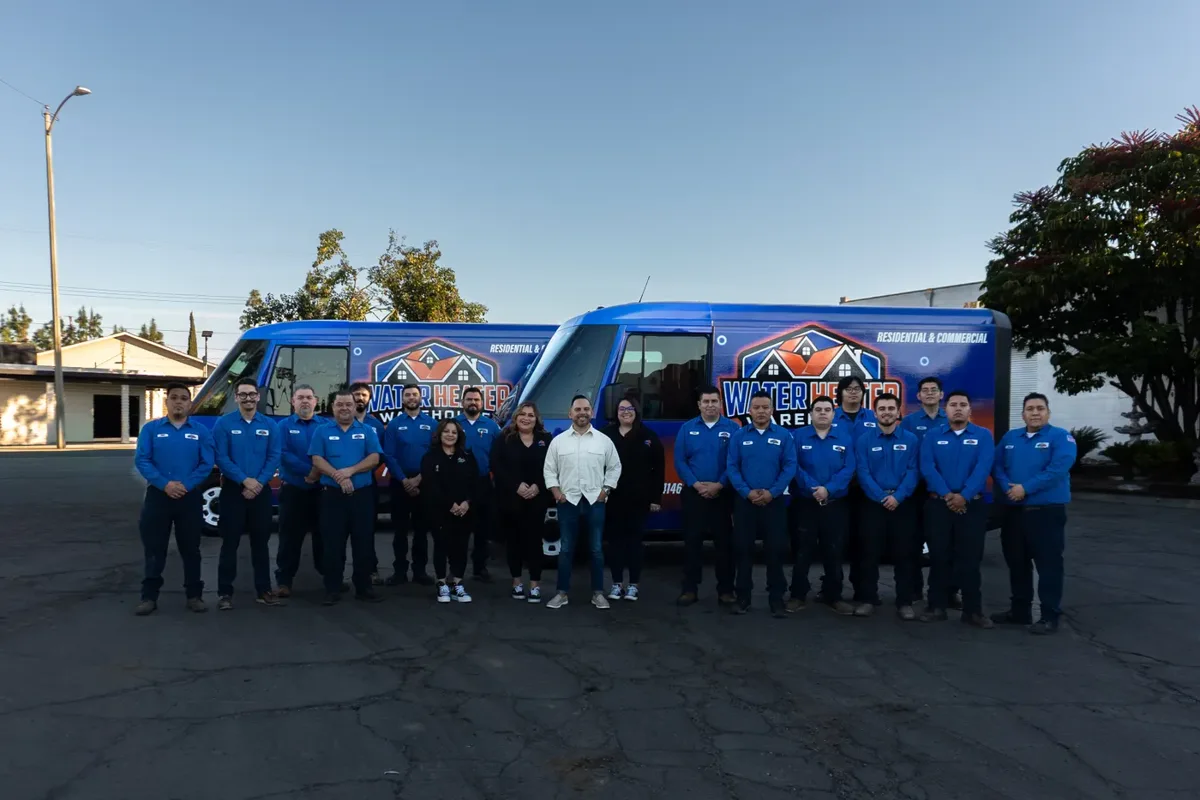
FAQ
How often should I flush my tank water heater?
Many manufacturers suggest once a year, and homes with hard water may benefit from more frequent flushing. Check your tank's manual for its interval.
Can flushing stop the popping noise?
Often, yes. Popping is usually sediment at the bottom of the tank. If the sediment has hardened, flushing may only reduce the noise.
Is it safe to flush an old tank?
On very old tanks, an unused drain valve can leak after opening. We tell you before starting if a flush might do more harm than good.
What is an anode rod?
It is a metal rod inside the tank that corrodes in place of the tank lining. When it is used up, the tank itself starts to corrode.
Will flushing repair a burned-out electric element?
No. Sediment removal may expose conditions around an element but cannot restore a failed element or thermostat. Slow recovery has several possible causes, so electrical testing may be separate. Power must remain off while draining, and the tank must be completely full before elements are energized again. A flush is not a substitute for repairing an electrical fault.
Should clear drain water end the inspection?
Clear water is only one observation. It does not establish anode, relief valve, vent or electrical condition, and hardened deposits can remain. Inspection follows the agreed scope and manufacturer guidance. Ask for accessible component findings and limitations rather than treating clear hose discharge as proof that the entire heater is healthy.
Related services
Water Heater Maintenance Plans
Explore service detailsTank Water Heater Replacement
Explore service detailsTankless Water Heater Descaling
Explore service detailsWater Heater Installation
Explore service details
Help with tank water heater flush & maintenance
Discuss your tank water heater flush & maintenance needs
Call us for a free quote on a tank flush, or ask about adding it to a maintenance plan.
(714) 244-8562